Lithium Polymer
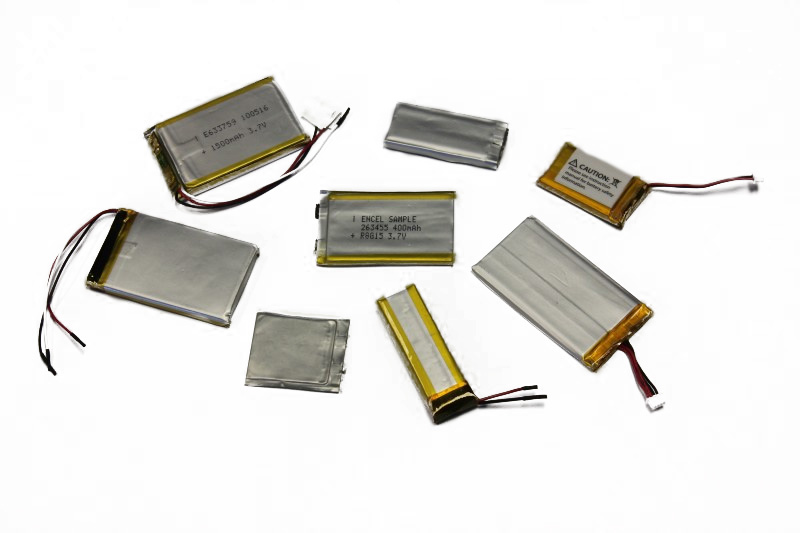
Lithium Polymer Ion batteries provide the performance of the Li-ion in a thin or moldable package. They do not use a volatile liquid electrolyte and can sustain significant abuse without explosion or fire.
The lithium polymer uses a polymer gel electrolyte to replace the traditional liquid electrolyte. Lithium-polymer finds its market niche in applications that require thin geometries, such as batteries for cell phones, tablets, wearable technologies and other such applications. Expected cycle life is about 500+ full charge and discharge cycles.
- Over 900 Standard Cells Sizes Available
- Standard Series Continually Expanding
- Standard and Custom PCM
- Customized Cell Sizes Available
If one of our 900+ sizes does not meet your application needs, custom sizes can be tooled in ~4 weeks.
| Typical Performance Characteristics of Lithium Ion Batteries | |
| Operational Battery Voltage | 4.2 to 2.7 Volts |
| Specific Energy | 100 to 158 Wh/Kg |
| Energy Density | 185 to 220 Wh/L |
| Power Density | 245 to 430 W/Kg |
| Continuous Rate Capability | Typical: 1C |
| High Rate | 5C up to 15C |
| Pulse Rate Capability | Up to 15C |
| Cycle Life at 100% DOD | Typically 500 |
| Calendar Life | 3 – 5 years |
| Self Discharge Rate | 0.3% / month |
| Operable Temperature Range | -20C to 60C |
| Operable Charge Temperature Range | 10C to 45C |
| Memory Effect | None |
Note: Characteristics can change according to improvements in chemistry or special niche requirements.
Advantages
- Thin profile
- Prismatic and cylindrical form factors
- Lightweight
- Improved safety
- Easily Customizable Sizes
- Hi temp and cold temp capabilities
- Current lists and audit every 60 days
- Changes daily – contact us to learn more
Typical Application
- Tablets
- Cell Phones
- Portable medical devices
- Laptops
- Compact consumer electronics
- Wearable devices
- Drones